The story
The Trojan War story in brief
The Trojan War in brief: the golden apple, Helen, Achilles, Hector and the wooden horse, with what the ancient sources say and what they leave out.
Book Troy on Viator ↗The war in one paragraph
Wikipedia describes the Trojan War as a legendary conflict in Greek mythology, set in the thirteenth or early twelfth century BC. The Greeks, whom the poems call Achaeans, fought the city of Troy after Paris, a Trojan prince, took Helen from her husband Menelaus, king of Sparta. Menelaus's brother Agamemnon led the expedition and besieged the city for ten years. After the deaths of many heroes the city fell to a trick. No single ancient text tells the whole story; it is pieced together from several poems and later writers.
A golden apple and three goddesses
The myth begins before the war, with a wedding. Eris, goddess of discord, was left off the guest list and threw in a golden apple as a prize for the fairest. Hera, Athena and Aphrodite each claimed it, and Zeus appointed Paris to judge. Each goddess offered a bribe, and Aphrodite offered the most beautiful mortal woman, Helen of Sparta. Paris gave her the apple. Wikipedia notes that the Iliad alludes to the judgement only briefly, and a fuller account appeared in the Cypria, a lost poem of which only fragments and a summary survive.
Achilles and the quarrel
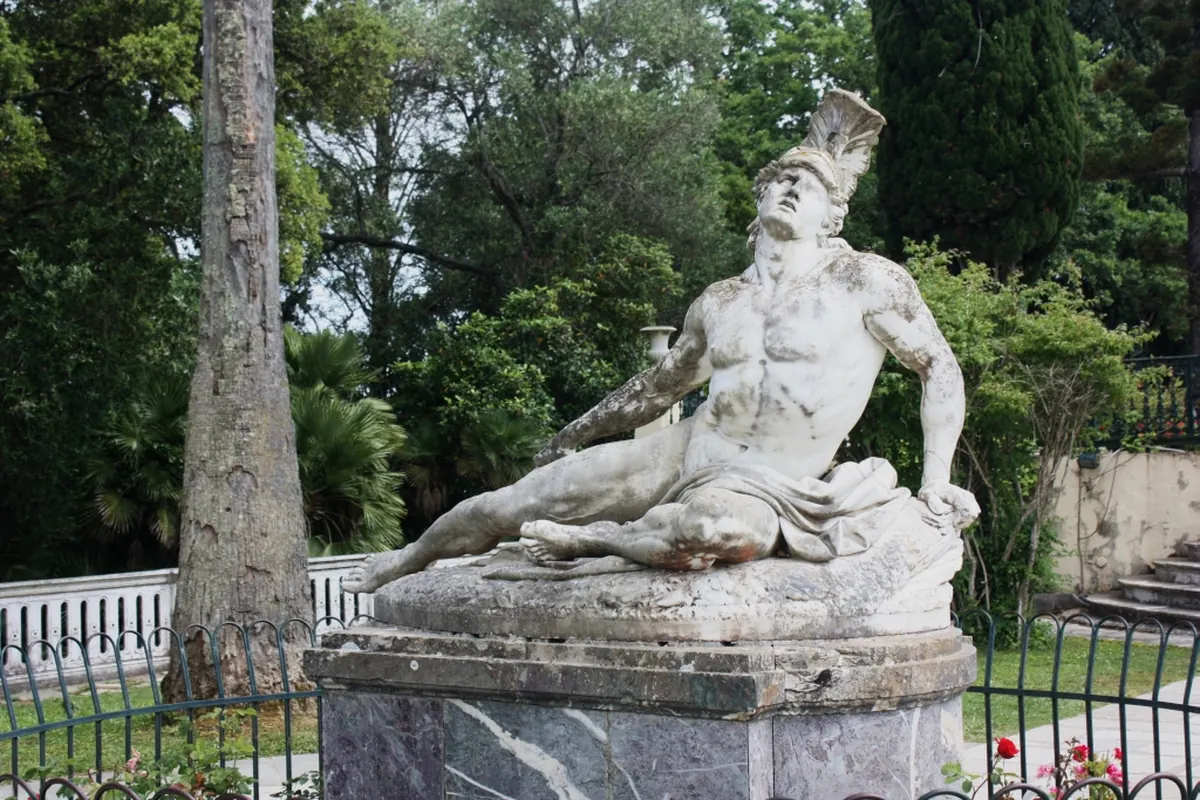
The Iliad does not tell the whole war. It focuses on a short stretch of the final year and on the wrath of Achilles, from his quarrel with Agamemnon to his killing of Hector. Agamemnon took Briseis, a captive who belonged to Achilles, and Achilles withdrew from the fighting in anger. His companion Patroclus fought in his place, wearing his armour, and was killed by Hector. That loss brought Achilles back to battle. The poem is traditionally credited to Homer and divided into twenty-four books.
Hector, the Trojan champion
Hector is the first-born son of King Priam and Queen Hecuba, and the commander of the Trojan army. Wikipedia calls him the greatest warrior for Troy. He is married to Andromache, and their son is Astyanax. Achilles kills him in single combat outside the city gates and drags his body behind a chariot. Priam then ransoms the body, and the last lines of the Iliad are given to Hector's funeral. Many readers find that the poem ends by honouring the man the Greeks killed, which is why choosing a side at a show like Troy is harder than it looks.
The wooden horse
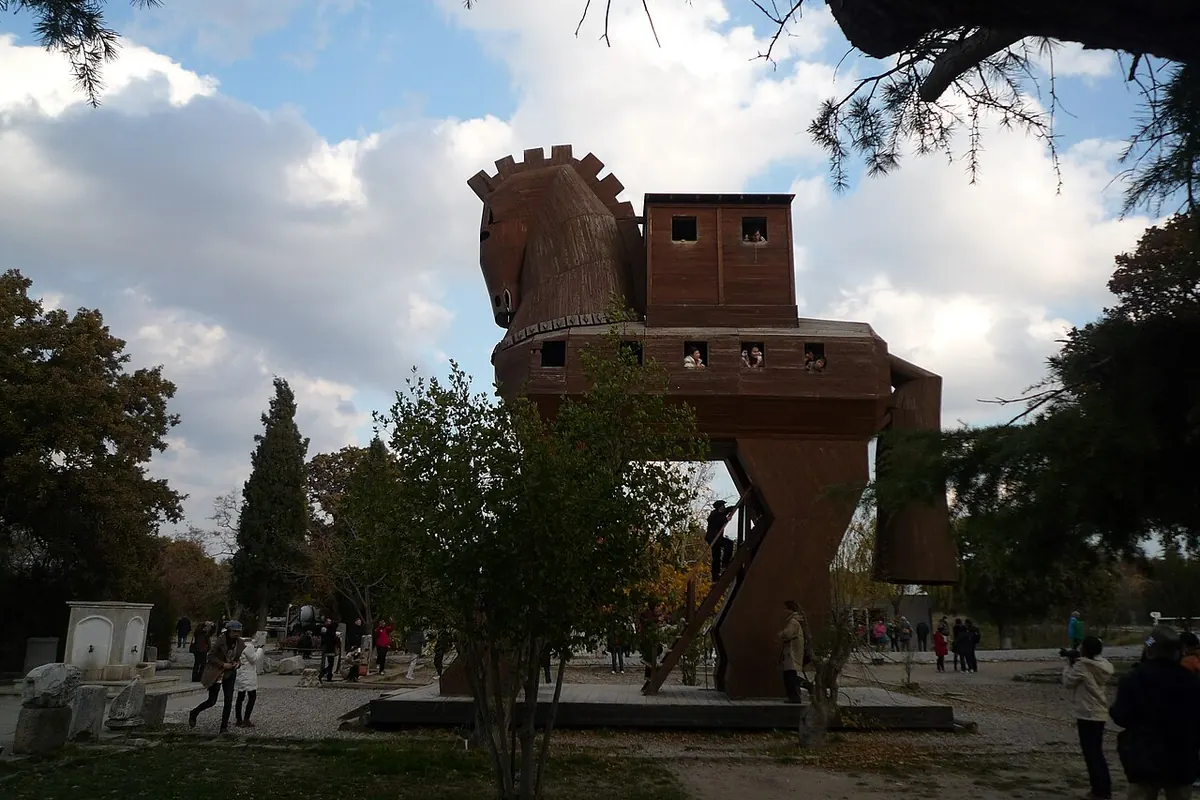
The horse is the best-known image of the war, and it is not in the Iliad. Wikipedia says the Odyssey refers to it briefly, as the horse of wood that Epeius made with Athena's help, and that Virgil's Aeneid gives the most detailed account. In Virgil, the Greeks build a huge horse after a fruitless ten-year siege. Sinon persuades the Trojans it is an offering to Athena, the priest Laocoön warns against it, and Cassandra's warning goes unheeded. The line about fearing Greeks even when they bring gifts is Laocoön's.
Crete in the story
Crete has a part in the myth. Wikipedia describes Idomeneus as a Cretan king and commander who led the Cretan armies to the Trojan War in eighty black ships, and in the Iliad he is among the first rank of the Greek generals. A later tradition says a storm struck his ship on the way home and that the Cretans sent him into exile. That is one reason a Trojan War show in Crete is not as far from home as it sounds: the island sent its own king to the war.
Myth, poem and history
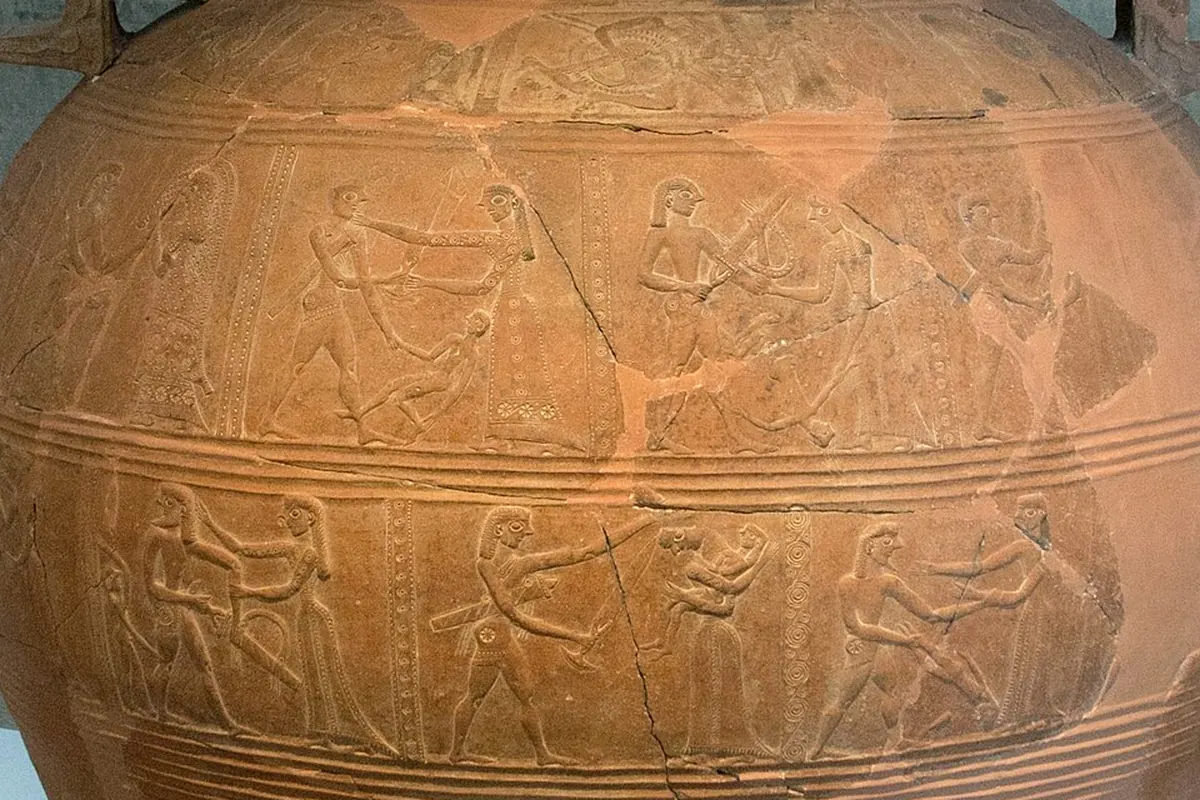
Wikipedia says the historicity of the Trojan War remains an open question, and that many scholars believe there is a historical core to the tale. Excavations at Hisarlik in modern Turkey support the claim that Troy was there, a view now accepted by most scholars. The Iliad's composition is placed mostly in the late eighth century BC. The Mykonos vase, a storage jar of about 675 BC, is one of the earliest objects to show the wooden horse, so the story was already being painted within a century or so of the poem.
Who this isn't for
This guide is a summary, not a reading list. If you want the Iliad itself, read a translation; it ends with Hector's funeral, not with the fall of Troy. And if you hope a dinner show will stage every episode here, adjust your expectations. A show chooses its scenes, and the production's own pages describe heroes, gods and goddesses, a choice between Greeks and Trojans, and games, not a scene list.
Sources